How to Get Better at Building in Minecraft: 8 Fixes That Work
Your house is finished, every wall is up, and it still looks like a shoebox dropped in a field. Sound familiar? Most players hit this wall around hour fifty. Learning how to get better at building in Minecraft has less to do with talent than with a few habits you can repeat. Mojang has said the game has sold 300 million copies, so plenty of people are stuck at the same spot.
Quick Answer: Pick a small block palette, push and pull your walls for depth, vary the roof and outline, and add details last. Practice on small projects like a cottage or bridge, then check every build for flat surfaces. That is how to get better at building in Minecraft without memorizing blueprints.
1. Start With Building Fundamentals
Skip the cathedral. Every strong build starts as a basic build: a simple shape with sensible proportions. Try a rectangular layout around 9 by 13 blocks with walls 5 or 6 blocks tall. That fits a bed, furnaces and chests, and you can finish it in one session.
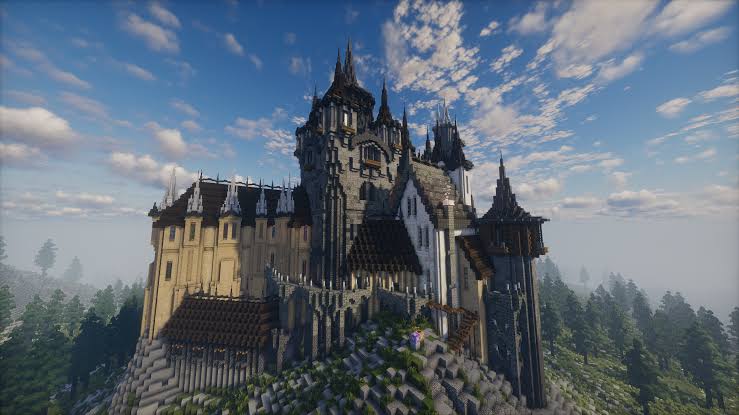
Here’s what most guides miss. Sketch the silhouette first. I open MS Paint or KolourPaint, draw the roof outline in two minutes, and only then place a block. Erasing pixels is far cheaper than breaking 200 blocks.
Beginners usually make three mistakes: perfect symmetry everywhere, walls taller than they are wide, and no floor plan. Survival players asking what to build on Minecraft survival often hear “a base” and nothing more. Give yourself a rule instead. If you want how to build a base in Minecraft that you won’t abandon, begin with a compact two room cottage and add wings later. Staying small is the habit that makes every later skill easier to learn.
Shape is only half the story, because color decides whether that shape looks good.
2. How to Get Better at Building in Minecraft With a Smarter Block Palette
A block palette is the small set of materials your build uses. Think in three tiers: roughly 60% main block, 30% secondary, 10% accent. Most good houses use four to six block types. Past eight, things usually turn messy, though a few experts pull it off.
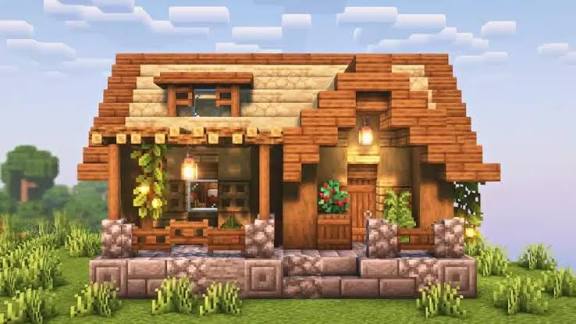
Contrast matters more than variety. Brightness contrast, meaning dark against light, reads from far away, while hue contrast is a bonus. Dark spruce logs framing pale birch wood works because your eye separates them instantly. A neutral palette like stone bricks and cobblestone also pairs nicely with a warm color palette of oak planks.
| Style | Main | Secondary | Accent |
| Medieval | Cobblestone | Spruce planks | Dark oak logs |
| Modern | White concrete | Smooth stone | Glass panes |
| Fantasy | Mossy stone bricks | Birch wood | Lanterns |
Choosing materials is how to get better at Minecraft building in the cheapest way possible, since it costs you nothing but a decision. Next up is the trick that makes people ask whether you used a mod.
3. How to Get Better at Building in Minecraft Walls: Add Depth
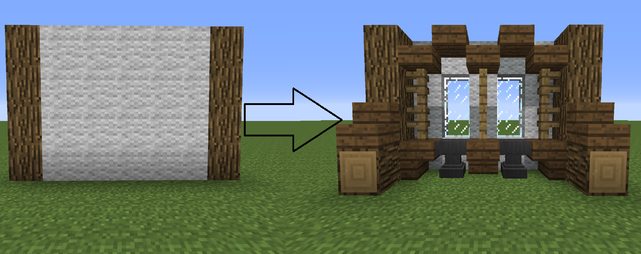
Flat walls are the biggest giveaway of a beginner build. Fix them by pushing sections one block out or one block in. Place log pillars at the corners, recess the planks between them, and extend the roof one or two blocks past the wall as an overhang.
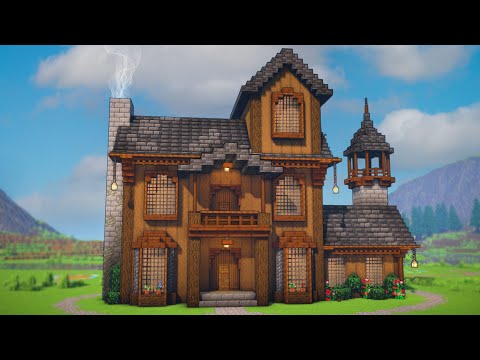
Windows deserve the same treatment. Set glass panes one block inward, then frame them with trapdoors as shutters. Stairs placed upside down under the eaves add structural depth with almost no effort.
In my experience, this one change beats everything else. I rebuilt my first survival farmhouse by swapping flat oak for pillars every four blocks, and visitors thought I’d started over. Two layers of depth per wall is usually plenty, and a third layer tends to clutter the build.
Depth fixes the walls, but the outline still needs work.
4. What to Build on Minecraft When Bored: Shape and Roofs
Boredom is a good teacher. If you’re wondering what to build on Minecraft when bored, try a watchtower, a windmill or a fishing dock, each of which forces you off the plain box. Players asking what to make when bored in Minecraft often just need a small project with a new shape.
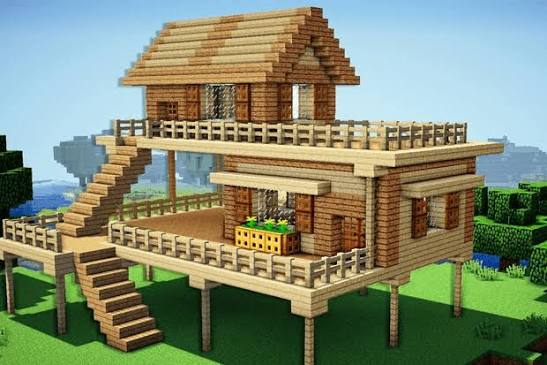
Move to an L shaped or T shaped layout, or an irregular building outline. Steep roofs suit medieval builds, shallow roofs fit modern ones, and an asymmetrical roof adds character. Curved shapes work too, but build circles with a radius of at least 5 blocks, because smaller ones look lumpy.
A greenhouse makes a great side wing. For how to make a greenhouse in Minecraft, use a 5 by 7 footprint, glass panes for walls, a stair and slab roof for a gentle slope, and a water source in the middle for crops.
Once the shape is right, small touches bring it to life.
5. Add Detail Without Overbuilding
Details should support the build, not bury it. Add flowerboxes under windows with trapdoors and flowers, balconies from fences and slabs, and dormers to break up long roofs. Walls (the block type) make excellent trim, and so do stairs and slabs.
Speed matters too. For how to build quickly in Minecraft, finish the full shell first, then do one detailing pass. If you play in Creative, building mods like WorldEdit let you copy a finished section, though survival purists skip them.
Here is my unusual tip: test builds under shaders like Rethinking Voxels. Shadows exaggerate flat spots, so bad depth shows up immediately.
Random decoration hurts more than none, so ask what each addition adds.
6. How to Quickly Build in Minecraft: A Simple Bridge
Bridges are perfect practice because they’re small and repeatable. Make the deck 3 blocks wide, place pillars every 5 to 7 blocks, and curve the underside with upside down stairs to form arches. Add guardrails from fences or walls and a lantern every 4 blocks.
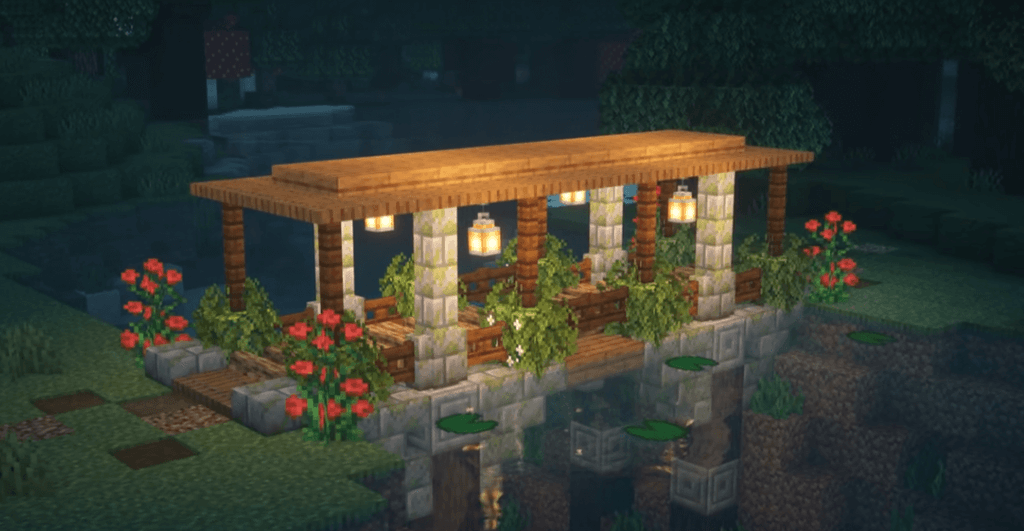
Match the bridge palette to nearby builds, so a stone village gets stone bricks with spruce rails. Good bridge design is one of the fastest routes to getting better at building in Minecraft, because every part of the structure is visible. Its pillar rhythm teaches you pattern variation.
Bridges connect builds, and the next step is connecting builds to land.
7. How to Get Better at Building in Minecraft Naturally
Terrain integration separates good builds from great ones. Let a cabin sit against a hill, or tuck a tower into cliffs and ravines instead of flattening everything. Mix gravel and path blocks for path detailing, and plant trees close to walls.
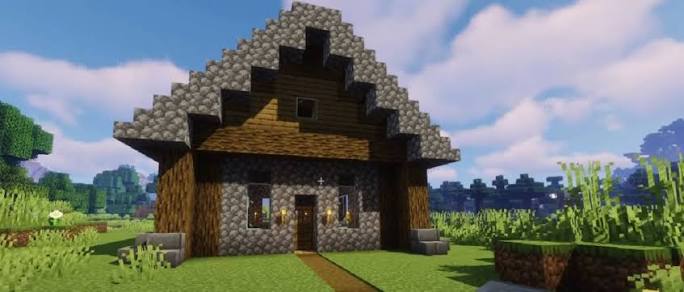
Weathering sells age. Swap in mossy blocks, cracked stone bricks, and a few missing blocks for a decaying appearance, and let vines creep over rough textures. Weather your stone but not your wood, since damaged wood rarely looks charming.
Leave some areas bare, because visual monotony beats chaos only when the quiet spots frame the busy ones.
8. Fix an Existing Build
Zoom out, squint, and look at the outline. If it reads as a box, change the roof first. Then work in this order: palette, flat walls, silhouette, details. Remove anything that doesn’t belong. Twenty-minute challenges on small projects beat one giant world.
Frequently Asked Questions
What are the most important Minecraft building fundamentals?
Shape, palette, depth, and restraint. Master those four before adding decoration.
How many blocks should I use in a palette?
Four to six for most houses.
How do you add depth to a wall?
Recess planks between log pillars and extend roofs past the wall.
Should builds be symmetrical?
Not always. Asymmetry feels natural if the visual weight stays balanced.
What should I add first when detailing?
Windows and the roof edge, because they’re the most visible.
conclusion:
Learning how to get better at building in Minecraft comes down to a tight palette, layered walls, a distinctive outline, and restraint. Pick one fix today and apply it to your weakest build. Even a small repair shows you how to get better at building in Minecraft faster than any tutorial.
Recommended Articles
How to Mine in Minecraft: Quick Guide to Ores, Depth & Safety
What Do You Do in Minecraft? Your First Day Survival Guide
Minecraft Online: How to Play With Friends, Multiplayer Options & Safety Guide
How Do You Jump in Minecraft? Distance, Height & Movement Guide
What to Put in a Minecraft House: 25+ Ideas for Every Builder